In case you’re looking for a SQL client that is cross-platform, lightweight, and free SQL client, check out:
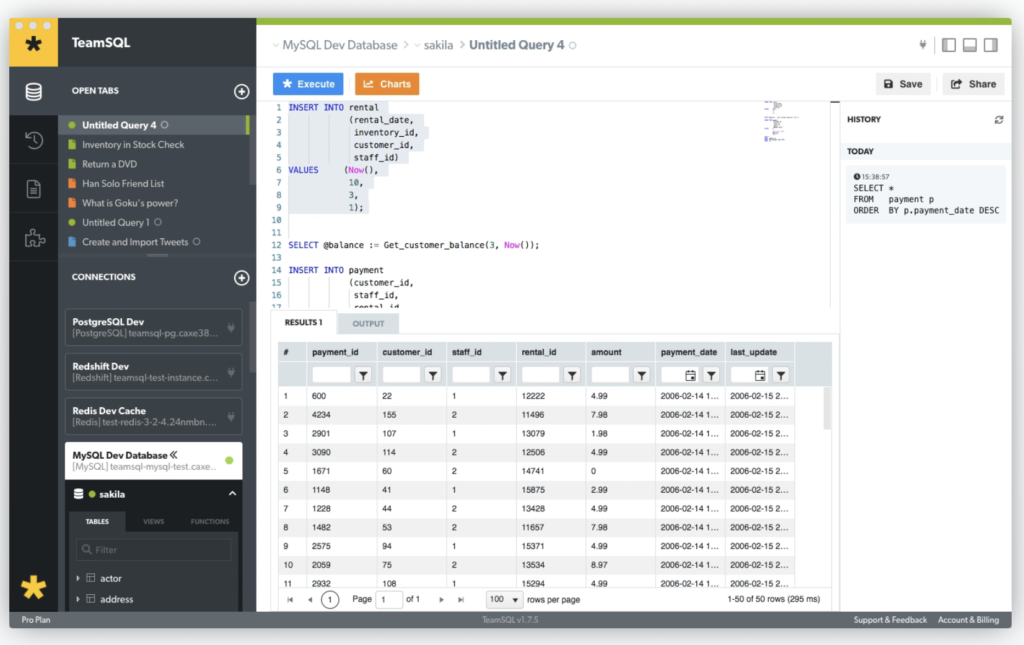
I use it on a Mac. It’s easy to use and feels “new.”
In case you’re looking for a SQL client that is cross-platform, lightweight, and free SQL client, check out:
I use it on a Mac. It’s easy to use and feels “new.”
This is specifically for Mongo 3.x, where MongoCollection is preferred over DBCollection. Adding for personal archiving.
MongoCollection<Document> mongoCollection =
            getMongoCollection(databaseName, collectionName);

        FindIterable<Document> documents =
            mongoCollection.find(eq(COLUMN, "lastName"))
                .sort(ascending("lastname"));

        for (Document document : documents) {
            ...
        }
Coming from a Microsoft/SQL Server world but now into Open Source/Oracle, I didn’t know what the syntax was, so here’s how:
select * from table where column < to_date(‘6/21/2014 21:50:0′,’mm/dd/yyyy HH24:MI:SS’);
select * from table where column > to_date(‘6/21/2014 21:50:0′,’mm/dd/yyyy HH24:MI:SS’);
Hope this helps someone out there. Cheers!
I was encountering the following error in soapUI when one of the test steps was to check the database.
com.eviware.soapui.support.SoapUIException: Failed to init connection for drvr [com.microsoft.sqlserver.jdbc.SQLServerDriver], connectionString [jdbc:sqlserver://server:port;databaseName=DB name;user=username;password=#####]
The issue was because my soapUI installation didn’t have the appropriate ODBC jar file.
1. Get it from Oracle
2. Place it in your $SOAPUI/bin/ext folder
3. Restart soapUI
4. That’s it!
To fix it, try the following:
1. In the terminal, run ‘touch /tmp/mysql.sock’.
2. Restart mysql.